What if you could travel through the history of railways, build a collection of legendary locomotives and manage your own working railway company?
That’s the experience behind TrainStation 3: Journey of Steel, a mobile train tycoon game developed by Pixel Federation. It brings together railway history, realistic train operations, an interactive train world and the challenge of building and expanding your own locomotive fleet.
Players take on the role of Dispatchers, developing their railway operations as they progress through different historical eras. From steam locomotives of the 1930s to modern trains, the world evolves alongside their progress, introducing new technologies, upgraded facilities and changing visual styles.
But TrainStation 3 is about more than collecting trains. It is about seeing them in action, following their journeys and managing the operations of a railway company.
What Is TrainStation 3: Journey of Steel?
TrainStation 3 is a mobile railway management and train tycoon game developed by Pixel Federation. Players collect locomotives and railcars, manage railway operations, transport cargo and progress through decades of railway history.
The game combines four central elements:
Realism: Detailed train movements, loading animations, maintenance tasks and an immersive rail yard inspired by real railway operations.
Historical progression: Travel through railway eras, from the steam-filled 1930s to modern times.
An interactive train world: Follow trains on their journeys, explore the rail yard and observe their daily operations.
Collection and expansion: Build a fleet of steam, diesel and electric locomotives, along with railcars, each with its own characteristics and uses.
Together, these elements create a railway world where players can experience the evolution of trains while developing a working rail company.
Progress Through Time: Experience Different Railway Eras
One of the defining features of TrainStation 3 is its progression through railway history.
The journey begins in the steam-filled 1930s and moves forward through the decades towards modern railways. As players progress, the world around them changes to reflect each period.
New railway technologies become available, facilities are upgraded and the visual environment evolves. This means that progression is not only about unlocking new trains. It is also about witnessing how railway operations and their surroundings change over time.
For train enthusiasts, this creates an opportunity to explore different chapters of railway history in one evolving game world. Steam legends, diesel workhorses and modern electric locomotives all have their place in the journey.
Realism You Can Feel: A Working Railway Company
TrainStation 3 puts attention on the details that make railway operations feel alive.
Every train movement, loading animation and maintenance task is designed to reflect the operations of a working rail company. Players can watch their trains roll into the yard, unload cargo, receive maintenance and head back out for their next assignment.
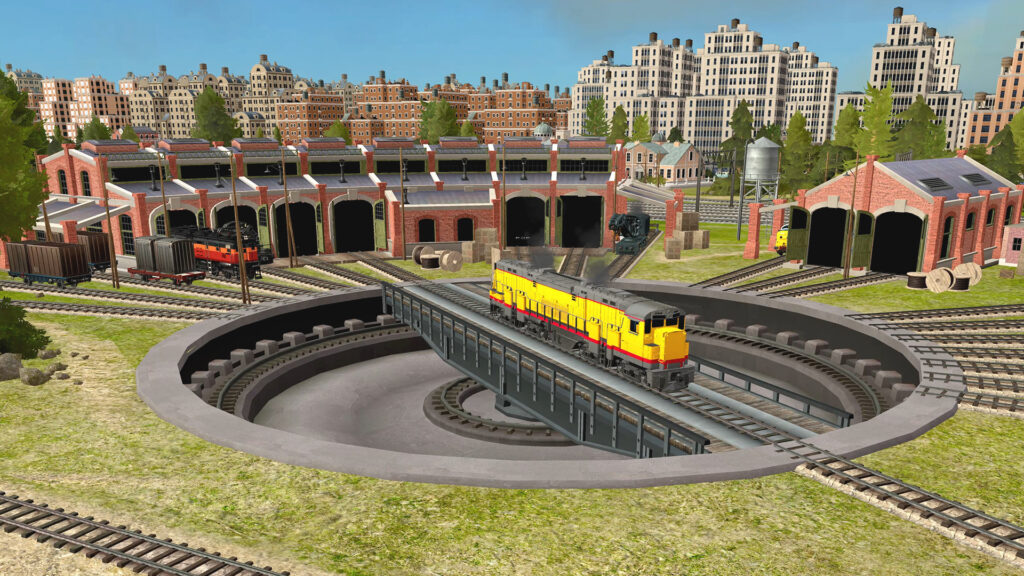
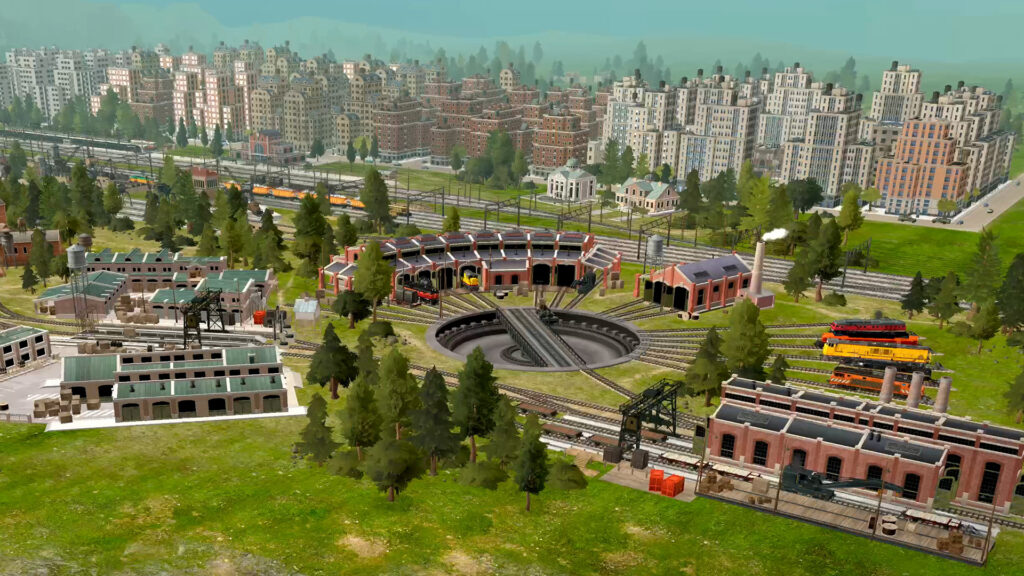
The rail yard itself is an important part of this experience. Detailed textures, terrain and environmental elements give it the feel of a real railway facility. A working turntable allows locomotives to rotate and park alongside the rest of the fleet, while the freight car depot sits next to the warehouse for a more connected layout.
The passenger station also brings more activity into the yard, with passenger train sets visible while parked. Factories and electrification systems feature their own animations, adding movement and detail to the surrounding railway environment. Players can also build electric catenary systems, with designs that reflect different historical eras.
These operational details connect the strategic side of railway management with the visual satisfaction of watching trains perform their jobs. The goal is to bring railway operations to life, not just to display a collection of locomotives.
An Interactive Train World: Follow Every Journey
In TrainStation 3, trains are more than background scenery. They are at the centre of the game world.
Players can follow their locomotives on their journeys, explore the rail yard and use full camera control to take a closer look at the details.
They can watch trains couple up, unload their cargo or rest in the depot. These interactions give players the freedom to explore the railway environment and enjoy the details of their growing operation.
Whether you want to follow a locomotive on its route or simply spend some time exploring the rail yard, the interactive world makes the railway experience more personal.
Collect, Build, Expand: Create Your Own Locomotive Fleet
Building a locomotive collection is another central part of TrainStation 3.
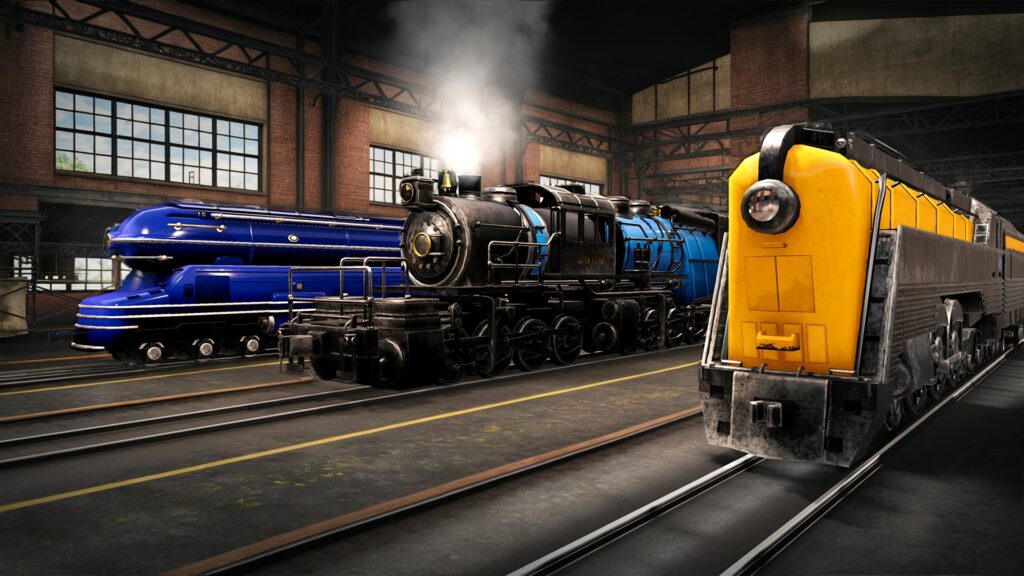
The game features different types of railway machines, from steam legends and diesel workhorses to electric locomotives. Players can also collect railcars to expand their fleet.
Each locomotive and railcar has its own stats, uses and visual style. This makes collecting more than a matter of filling a catalogue. Different machines have different roles within railway operations, giving players new options as their company grows.
The challenge is to keep expanding your fleet and make the most of the locomotives and railcars available to you.
For train lovers, this is an opportunity to bring together different generations of railway engineering in one place.
New Events Bring Fresh Railway and Logistics Challenges
Beyond the main progression, regular events introduce new themes, objectives and gameplay mechanics to TrainStation 3.
They give players a chance to explore different aspects of railway operations and take on challenges that go beyond regular cargo transportation.
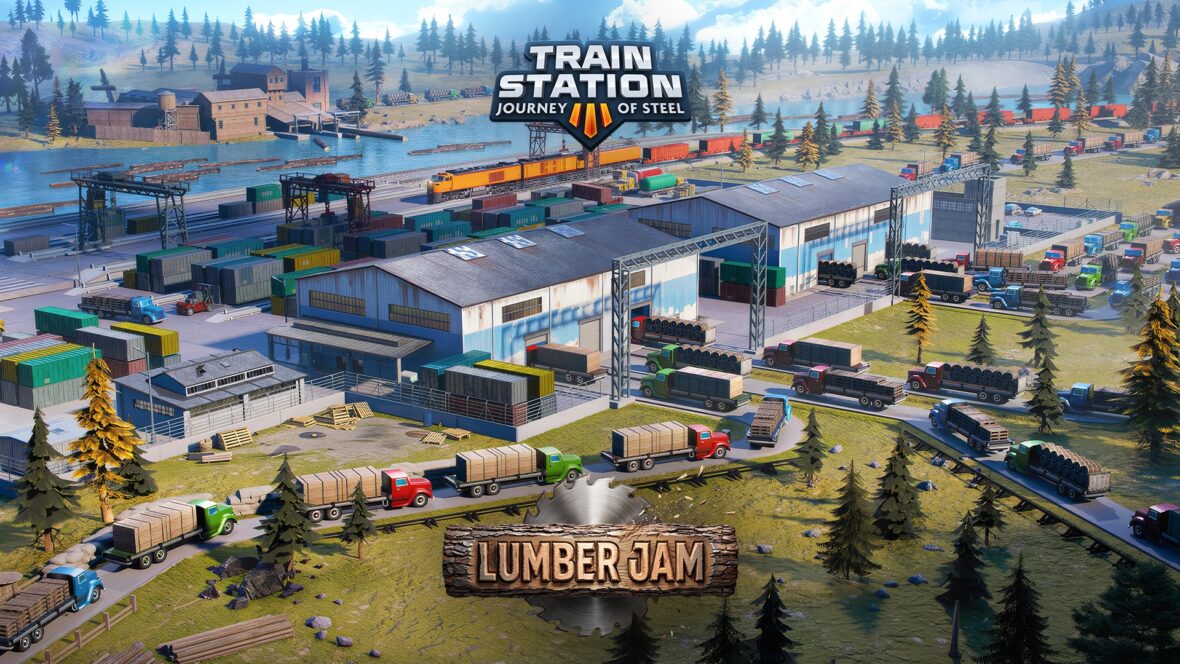
One example is Lumber Jam, an event inspired by the Nordic woodworking industry and the flat-pack furniture revolution.
In this event, players team up with Thomas, Cecilia, Lumberjack Pal and Designer Gil to manage a modern production and logistics network. Their task is to help deliver affordable wooden furniture to households while keeping the supply chain running efficiently.
Lumber Jam introduced a new gameplay mechanism: Supply Chain Management. Players had to coordinate several connected stages of production, managing raw timber, resin, particleboards and packed pallets.
The event featured three key mechanics:
Dynamic Bottleneck Mechanics
Players had to manage the flow of materials through the production network. If one facility slowed down, the entire network felt the impact.
Keeping production moving required attention to each stage of the supply chain and the connections between facilities.
Factory & Facility Upgrades
By completing strategic logistics contracts, players could earn Upgrade Tokens and use them to improve their facilities:
Log yards
Resin plants
Assembly factories
Upgrading these facilities helped players improve their production network and manage bottlenecks more effectively.
Energy & Fuel Optimization
Players also had to consider real-time fuel and engine management when dispatching trains.
Planning efficient multi-tier routes became important for coordinating deliveries and keeping the supply chain moving.
Lumber Jam is one example of how events can introduce new strategic challenges while keeping locomotives and railway management at the heart of the experience.
Made by Train Lovers, for Train Lovers
TrainStation 3 is developed by a team of railway enthusiasts, tycoon fans and game developers at Pixel Federation.
That combination of interests shapes the experience: a game that celebrates the past, explores the present and imagines the future of trains.
From the evolution of railway technology to the details of locomotive operations, TrainStation 3 brings together different aspects of railway enthusiasm in one evolving world.
The result is a train game where players can collect the machines they admire, watch them in action and build a railway operation that grows through the decades.
Start Your Railway Journey in TrainStation 3
Ready to explore railway history and build your own fleet?
TrainStation 3: Journey of Steel is available as a free mobile game on the App Store and Google Play. Collect steam, diesel and electric locomotives, expand your railcar collection, manage train operations and experience the evolution of railways through different historical eras.
TrainStation 3: Journey of Steel is a mobile train tycoon and railway management game developed by Pixel Federation. Players collect locomotives and railcars, manage railway operations and progress through different historical eras.
Can you progress through different historical eras in TrainStation 3?
Yes. The game takes players on a journey from the steam-filled 1930s to modern times. As they progress, new technologies, upgraded facilities and changing visual styles reflect the evolution of railways.
What types of trains can you collect in TrainStation 3?
Players can collect steam, diesel and electric locomotives, as well as railcars. Each has its own stats, uses and visual style.
Is TrainStation 3 a train simulator?
TrainStation 3 is primarily a railway management and train tycoon game. It focuses on building a locomotive fleet, managing railway operations and progressing through railway history. Players can also follow trains on their journeys and observe details such as coupling, cargo unloading and maintenance.
Can you explore the trains and rail yard in TrainStation 3?
Yes. TrainStation 3 features an interactive train world with full camera control. Players can follow trains on their journeys, explore a detailed rail yard, watch locomotives rotate on a working turntable and see passenger train sets parked at the station.
What kind of gameplay challenges do TrainStation 3 events introduce?
Events introduce new themes, objectives and gameplay mechanics. For example, the Lumber Jam event introduced Supply Chain Management, including production bottlenecks, facility upgrades and fuel optimization.